Deadly Assumptions: Why Swapping Nitrogen for Ethylene Compressors Can Destroy Your Plant
An engineer who treats ethylene compression as “just like nitrogen but reactive” is designing a catastrophic failure. The fundamental differences between inert and reactive gas compression extend far beyond material compatibility—they reshape every aspect of explosion protection, sealing philosophy, and safety system architecture. This guide examines the critical distinctions in explosion protection and sealing between nitrogen and ethylene compressors, exposing the engineering assumptions that have caused facility fires, injuries, and regulatory shutdowns across the petrochemical industry.
Whether you are specifying equipment for a polyethylene plant, an ethylene oxide facility, or a nitrogen blanketing system, understanding these differences is not academic—it is a matter of life safety and operational continuity.
The Thermodynamic and Chemical Divide: Why Inert and Reactive Gases Demand Different Engineering
Nitrogen and ethylene sit at opposite ends of the gas reactivity spectrum. Nitrogen is a triple-bonded diatomic molecule with exceptional chemical stability. It does not combust, support combustion, or react with common engineering materials under any conditions encountered in industrial compression. Ethylene is an unsaturated hydrocarbon with a reactive double bond that makes it flammable, polymerizable, and capable of explosive decomposition under compression heat.
These chemical properties create fundamentally different hazard profiles that drive compressor design in divergent directions:
Auto-ignition temperature: non-existent. Flammability limits: none. Explosive decomposition: impossible. Material compatibility: universal. These properties make nitrogen the safest gas to compress, with hazard mitigation focused on pressure and asphyxiation rather than combustion.
Auto-ignition temperature: 450°C. Lower flammability limit: 2.7% in air. Upper flammability limit: 36% in air. Explosive decomposition possible above 35 bar and 200°C. Polymerization initiates at elevated temperatures with exothermic runaway potential.
The practical implication is stark: a nitrogen compressor can tolerate higher discharge temperatures, simpler sealing arrangements, and less rigorous explosion protection because the gas itself cannot combust or decompose explosively. An ethylene compressor must control every potential ignition source, maintain gas temperatures well below decomposition thresholds, and prevent any air ingress that could create an explosive mixture.
A compressor designed for nitrogen service that is repurposed for ethylene without comprehensive modification is not merely non-compliant—it is a bomb waiting for the right conditions. For facilities evaluating nitrogen compressor specifications for inert gas applications, understanding why these designs cannot be casually transferred to reactive gases is essential for safe procurement decisions.
Explosion Protection: ATEX/IECEx Classification for Nitrogen vs. Ethylene
Explosion protection under the ATEX Directive (2014/34/EU) and IECEx scheme classifies equipment based on the likelihood of explosive atmosphere presence and the ignition characteristics of the gas. Nitrogen and ethylene compressors fall into entirely different classification regimes.
| Parameter | Nitrogen Compressor | Ethylene Compressor | Engineering Impact |
|---|---|---|---|
| Gas Group (IEC) | Not classified (inert) | Group IIB (high ignition energy) | Ethylene requires IIB-rated electrical equipment; nitrogen has no group requirement |
| Temperature Class | T6 (85°C) typically sufficient | T4 (135°C) or T3 (200°C) depending on auto-ignition margin | Ethylene compressors need larger surface temperature margins; T6 may be insufficient |
| Equipment Protection Level | Gc (Zone 2) typically adequate | Gb (Zone 1) or Ga (Zone 0) depending on release probability | Ethylene requires higher protection levels with more rigorous certification |
| Explosion Protection Concept | Standard industrial (IP55/IP65) | Ex d (flameproof), Ex e (increased safety), or Ex p (pressurized) | Ethylene motors, switchgear, and instrumentation require explosion-proof enclosures |
| Cable Glands and Conduit | Standard industrial fittings | Ex-certified cable glands with compound sealing | Ethylene installations require certified cable entry devices and sealed conduit systems |
| Gas Detection | Oxygen deficiency monitors only | Hydrocarbon gas detectors with alarm and shutdown interlocks | Ethylene requires continuous leak detection with automatic emergency response |
The classification difference is not bureaucratic—it is life-safety critical. An ethylene compressor motor operating at 120°C surface temperature in a T6-rated enclosure (85°C limit) creates an ignition source. A cable gland without compound sealing allows ethylene to migrate into conduit systems, creating explosive atmospheres in electrically classified areas. A nitrogen compressor in the same installation would pose no such risk because nitrogen cannot form an explosive mixture with air.
Ethylene’s position in Gas Group IIB (rather than the more hazardous IIC which includes hydrogen and acetylene) provides some design margin, but this margin is easily eroded by polymerization heat, compressor inefficiency, or cooling system failure. The temperature class selection must account for worst-case fault conditions, not normal operation. A compressor that reaches 110°C during a cooling water failure must be rated T3 (200°C) or T4 (135°C), not T6 (85°C), because the fault condition—not the steady state—determines the safety envelope.
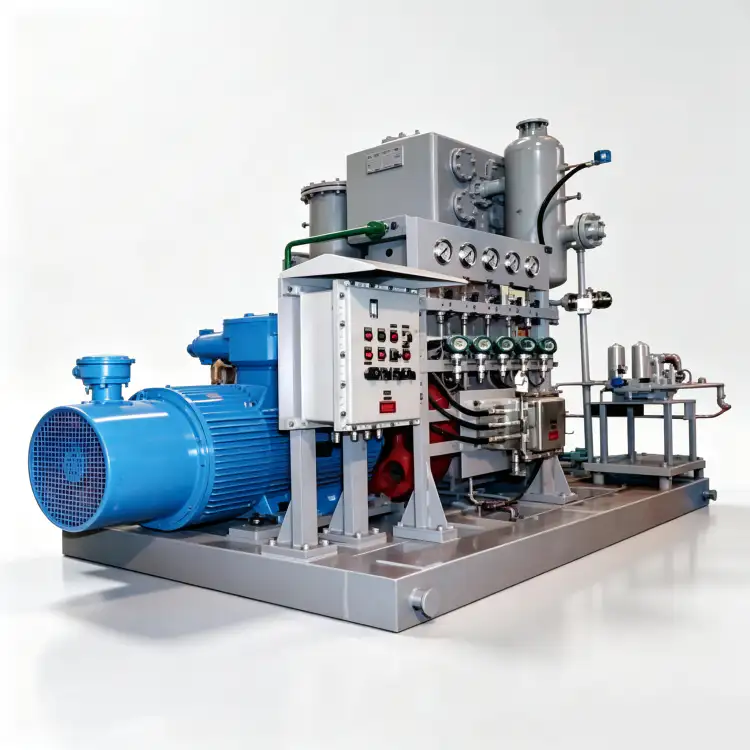
Sealing Philosophy: Containment vs. Isolation
The sealing strategy for nitrogen compressors focuses on preventing gas loss and maintaining efficiency. The sealing strategy for ethylene compressors focuses on preventing both gas loss and air ingress—because air ingress creates an explosive mixture inside the compressor that can be ignited by compression heat or mechanical friction.
Nitrogen Compressor Sealing
Nitrogen sealing requirements are straightforward. Standard piston rod packings, mechanical seals, or labyrinth seals are adequate. Nitrogen leakage to atmosphere is an economic loss and an asphyxiation hazard in confined spaces, but it does not create combustion risk. Seal material selection is driven by temperature and pressure compatibility rather than chemical resistance. PTFE, carbon-graphite, and standard elastomers (NBR, Viton) perform adequately across the full nitrogen compression range.
Distance pieces between crankcase and compression chamber prevent oil migration into the gas stream, but the primary concern is product purity (ISO 8573-1 Class 0 for food-contact applications) rather than explosion prevention. A small amount of nitrogen leakage past the seal is tolerable from a safety perspective, though it may be unacceptable for process efficiency or environmental reasons.
Ethylene Compressor Sealing
Ethylene sealing is an order of magnitude more complex. The seal must achieve three simultaneous objectives:
- Prevent ethylene leakage to atmosphere: Ethylene is a volatile organic compound with strict emission limits. Uncontrolled leakage creates flammable atmospheres around the compressor.
- Prevent air ingress into the compression chamber: Air mixing with ethylene creates an explosive mixture. Even small air ingress rates (1-2% by volume) can form mixtures within the flammability range during compression.
- Prevent lubricating oil contact with ethylene: Oil contamination can initiate polymerization, creating solid deposits that clog valves, overheat cylinders, and cause mechanical failure.
These requirements drive the use of specialized sealing systems:
- Double mechanical seals with barrier fluid: A pressurized inert barrier fluid (typically nitrogen or synthetic oil) between two seal faces prevents both ethylene escape and air ingress. The barrier fluid pressure is maintained 1-2 bar above the process gas pressure.
- Pressurized distance pieces: The space between the compression chamber and crankcase is maintained at positive pressure with nitrogen purge gas. Any leakage is nitrogen outward, not air inward.
- Dry gas seals: For high-pressure ethylene applications, non-contacting dry gas seals use a thin film of pressurized seal gas (nitrogen) to create a labyrinth barrier with near-zero leakage. These seals are standard on centrifugal ethylene compressors in polyethylene plants.
- Oil-free compressor architecture: Many ethylene compressors use oil-free piston or diaphragm designs to eliminate the oil-polymerization risk entirely. This eliminates the crankcase lubrication system but requires more frequent maintenance of self-lubricating components.
The cost difference is substantial. A nitrogen compressor rod packing might cost $500 and last 8,000 hours. An ethylene compressor double mechanical seal with barrier fluid system might cost $15,000 and require barrier fluid circulation, cooling, and monitoring systems that add $25,000 to the installation. The seal system alone can represent 20-30% of the total ethylene compressor cost.
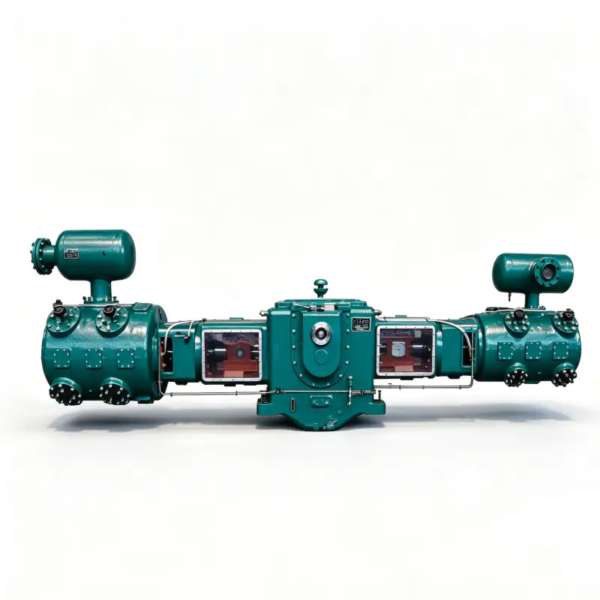
Material Selection: Where Nitrogen Tolerance Becomes Ethylene Vulnerability
Materials that perform flawlessly in nitrogen service can fail catastrophically in ethylene. The differences are not subtle—they are the difference between decades of reliable operation and a polymerization-induced blockage that destroys a compressor in hours.
Elastomer Compatibility:
- Nitrogen: All common elastomers are compatible. NBR, Viton (FKM), EPDM, PTFE, and silicone perform adequately across the temperature and pressure range. Selection is driven by temperature rating and mechanical properties.
- Ethylene: NBR swells and degrades in ethylene service. EPDM is generally acceptable but must be verified for specific ethylene grades (polymerization catalyst residues can attack certain formulations). PTFE and high-fluorine FKM (Kalrez, Chemraz) are standard for ethylene seals. Silicone is unacceptable due to permeability and swelling.
Metallurgy:
- Nitrogen: Carbon steel, cast iron, and standard stainless steels (304, 316) are universally suitable. Nitrogen does not cause corrosion, stress corrosion cracking, or hydrogen embrittlement. Material selection is driven by mechanical strength and cost.
- Ethylene: Carbon steel is generally acceptable but must be evaluated for polymerization catalyst compatibility. Some polyethylene plant ethylene streams contain trace aluminum alkyls or titanium chlorides that attack carbon steel. Stainless steel 316L or duplex 2205 is often specified for wetted parts. Copper and copper alloys must be avoided—ethylene can react with copper to form explosive copper acetylide compounds under certain conditions.
Lubricants:
- Nitrogen: Standard mineral oils, synthetic hydrocarbons (PAO), and polyglycols are suitable. Lubricant selection is driven by viscosity-temperature characteristics and oxidation stability. Food-grade lubricants (NSF H1) are used for food-contact applications.
- Ethylene: Standard mineral oils can initiate polymerization. Specialized synthetic lubricants with polymerization inhibitors are required. Some ethylene compressors use phosphate ester or polyol ester lubricants formulated specifically for olefin service. Oil-free designs eliminate this concern but introduce other maintenance requirements.
A catastrophic failure mode specific to ethylene is polymerization-induced blockage. Trace oxygen or peroxide contamination in the ethylene stream can initiate polymerization inside the compressor. The resulting polyethylene deposits adhere to cylinder walls, valves, and piping, reducing flow area, increasing pressure drop, and causing localized overheating. In one documented incident, a repurposed nitrogen compressor running ethylene experienced complete valve blockage within 72 hours due to polymerization, causing a discharge temperature excursion to 280°C and catastrophic mechanical failure. The compressor was not designed for ethylene, did not have polymerization inhibitors in the lubricant, and lacked the temperature monitoring that would have detected the excursion before failure.
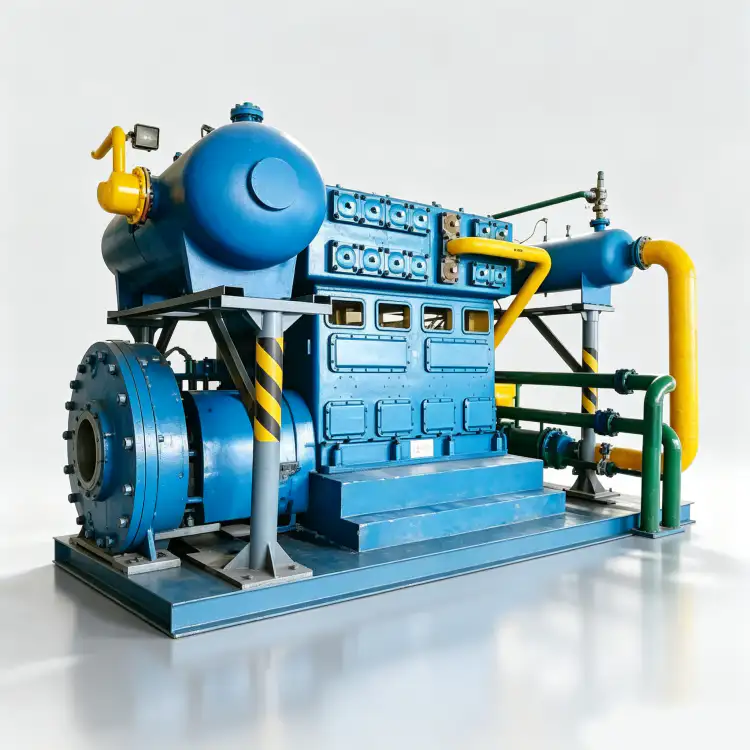
Temperature Control: The Critical Safety Margin
Temperature control is where nitrogen and ethylene compression diverge most dramatically. Nitrogen compressors can tolerate high discharge temperatures because the gas is thermally stable. Ethylene compressors must maintain discharge temperatures well below the decomposition threshold to prevent runaway reactions.
Nitrogen Temperature Limits:
- Standard design discharge temperature: 150-180°C
- Maximum allowable: 200°C (limited by lubricant degradation and seal material limits)
- Thermal decomposition: none
- Auto-ignition: impossible
Ethylene Temperature Limits:
- Standard design discharge temperature: 80-100°C
- Maximum allowable: 120°C (with 330°C margin to auto-ignition)
- Thermal decomposition initiates: ~200°C (with pressure-dependent thresholds)
- Explosive decomposition possible: >350°C
- Polymerization accelerates: >100°C (catalyst-dependent)
The 50-80°C design margin between nitrogen and ethylene compressors is not conservative—it is the difference between safe operation and catastrophic failure. Ethylene compressors require:
- Larger intercoolers and aftercoolers with 30-50% more heat exchange surface area
- Multiple compression stages with intercooling to limit stage discharge temperatures
- Redundant temperature monitoring with automatic shutdown at 110°C (10°C below maximum)
- Emergency cooling systems (nitrogen purge or water injection) activated by temperature alarm
- Lower pressure ratios per stage (2.5-3.0 vs. 5-7 for nitrogen) to reduce adiabatic heating
A nitrogen compressor operating at 160°C discharge is performing normally. An ethylene compressor at the same temperature is in the early stages of a runaway reaction. The temperature monitoring and control systems for ethylene must be more responsive, more redundant, and more conservatively alarmed than for nitrogen. Single-point temperature sensors are unacceptable—dual redundant sensors with comparison logic are standard practice.
For high-pressure ethylene applications, the ZW series nitrogen compressor design illustrates the temperature control philosophy that must be adapted—not adopted—for ethylene service. The ZW series achieves 300 bar discharge pressure through multi-stage compression with intercooling, maintaining stage temperatures below 150°C. An ethylene compressor at the same pressure would require additional intercooling stages, lower pressure ratios, and emergency cooling systems to maintain safe operating margins.
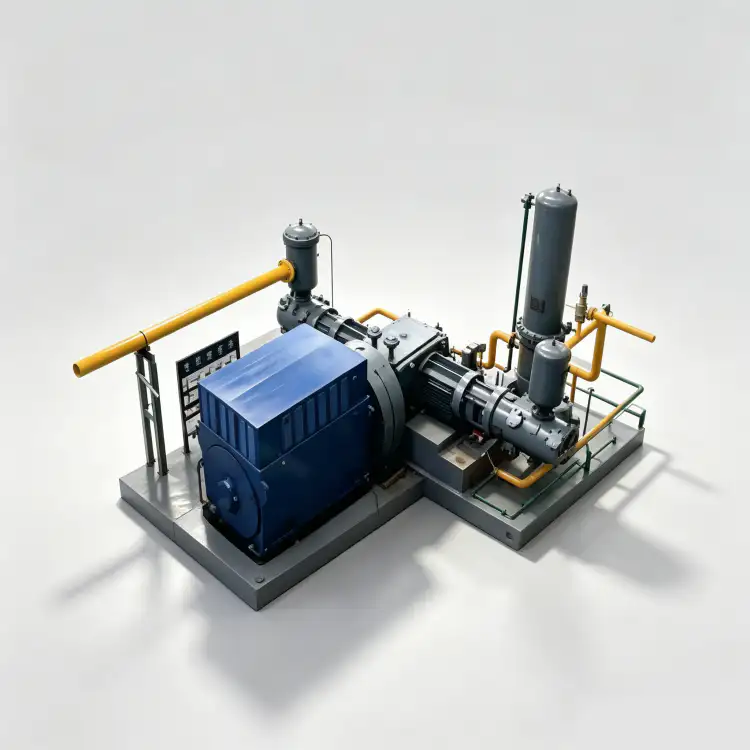
Safety Systems and Emergency Response Architecture
The safety systems surrounding a compressor must match the hazard profile of the gas being compressed. Nitrogen compressors require pressure protection and asphyxiation monitoring. Ethylene compressors require a multi-layered safety architecture that addresses combustion, decomposition, polymerization, and toxic exposure.
Pressure relief valves, oxygen deficiency monitors in enclosed spaces, standard electrical enclosures (IP55/IP65), and lockout/tagout procedures. Emergency response focuses on pressure release and ventilation.
Explosion-proof electrical (Ex d/Ex e), hydrocarbon gas detection with automatic shutdown, emergency nitrogen purge systems, fire suppression (CO2 or water mist), temperature monitoring with redundant sensors, and polymerization inhibitor injection.
Ethylene-Specific Safety Layers:
Layer 1: Prevention
- Oil-free compressor design or polymerization-inhibited lubricants
- Oxygen monitoring in ethylene supply to detect air ingress
- Stainless steel construction to prevent catalytic surface reactions
- Low temperature operation with multiple intercooling stages
Layer 2: Detection
- Continuous hydrocarbon gas detection at compressor, seals, and pipe connections
- Dual redundant temperature monitoring at each compression stage
- Vibration monitoring to detect mechanical degradation before failure
- Oil analysis for polymerization indicators (increased viscosity, particulate)
Layer 3: Mitigation
- Automatic nitrogen purge activated by gas detection or temperature alarm
- Emergency depressurization to safe vent systems (flare or recovery)
- Fire suppression systems with ethylene-compatible agents
- Isolation valves that close automatically on alarm to contain releases
Layer 4: Emergency Response
- Pre-planned evacuation zones based on gas dispersion modeling
- Fire brigade coordination with ethylene-specific response protocols
- Medical response capability for ethylene exposure (respiratory irritation, asphyxiation)
- Regulatory notification procedures for releases exceeding reportable quantities
The nitrogen equivalent of this safety architecture is a fraction of the complexity and cost. A nitrogen compressor room requires an oxygen monitor and a pressure relief valve. An ethylene compressor room requires a gas detection system with 12-20 sensors, explosion-proof electrical throughout, emergency nitrogen purge with dedicated storage, fire suppression, and automatic isolation systems. The safety system cost for ethylene can equal or exceed the compressor capital cost.

Regulatory Compliance: Where Nitrogen Simplicity Meets Ethylene Complexity
The regulatory burden for nitrogen compression is modest. The regulatory burden for ethylene compression is extensive, overlapping, and unforgiving. Understanding the compliance landscape is essential for project planning and ongoing operations.
Nitrogen Regulatory Requirements:
- Pressure Equipment Directive (PED 2014/68/EU) or ASME Section VIII for pressure vessel certification
- ISO 8573-1 Class 0 for food-contact or pharmaceutical applications
- General machinery safety (ISO 12100, IEC 60204-1)
- Workplace exposure limits for oxygen deficiency (OSHA, EU OEL)
Ethylene Regulatory Requirements:
- All nitrogen requirements plus:
- ATEX Directive 2014/34/EU for explosion-proof equipment
- Seveso III Directive (2012/18/EU) for major hazard facilities—ethylene threshold quantities trigger upper-tier obligations including safety management systems, emergency plans, and public information
- EPA Risk Management Plan (RMP) in the United States for ethylene quantities exceeding 10,000 lbs
- OSHA Process Safety Management (PSM) for ethylene as a highly hazardous chemical
- NFPA 69 (Explosion Prevention Systems) for deflagration protection
- API 618 (Reciprocating Compressors for Petroleum, Chemical, and Gas Industry Services) with ethylene-specific annexes
- NACE MR0175/ISO 15156 for sour service compatibility if hydrogen sulfide is present
The Seveso III threshold for ethylene is 200 tonnes for lower-tier establishments and 500 tonnes for upper-tier. A medium-sized polyethylene plant with ethylene storage and compression can easily exceed these thresholds, triggering obligations that include:
- Safety management system with documented hazard identification and risk assessment
- Safety report submitted to competent authorities and updated every 5 years
- On-site and off-site emergency plans with annual drills
- Public information disclosure within the consultation zone
- Land-use planning restrictions preventing residential development near the facility
None of these requirements apply to nitrogen compression. A facility that adds ethylene compression to an existing nitrogen compression plant crosses a regulatory threshold that transforms the entire site’s compliance obligations. Project planners must budget for regulatory compliance costs that can exceed the compressor capital cost—safety reports, emergency planning, public consultation, and ongoing audit requirements are not optional expenses.
Procurement and Operational Disciplines for Safe Ethylene Compression
The differences between nitrogen and ethylene compression demand procurement and operational disciplines that go far beyond standard equipment purchasing. Every decision—from vendor selection to operator training—must account for the reactive hazard that ethylene introduces.
Vendor Selection Criteria:
- Demonstrated experience in ethylene or olefin compression (not just “hydrocarbon” experience)
- Reference installations in polyethylene or ethylene oxide plants with contactable operators
- Full ATEX/IECEx certification for all electrical and mechanical equipment
- Material certifications with full traceability (EN 10204 3.2 for critical components)
- Polymerization inhibitor compatibility documentation for lubricants and seal materials
- Emergency response support capability (24-hour technical support, spare parts availability)
Operator Training Requirements:
- Ethylene-specific hazard awareness (flammability, decomposition, polymerization)
- Emergency response procedures (nitrogen purge activation, depressurization, evacuation)
- Gas detection system interpretation and alarm response
- Polymerization indicator recognition (temperature trends, pressure anomalies, vibration changes)
- Lockout/tagout procedures for ethylene systems with nitrogen purge verification
Operational Procedures:
- Startup: Nitrogen purge to remove air before introducing ethylene. Verify oxygen content <0.5% before ethylene admission.
- Normal operation: Continuous monitoring of temperature, pressure, vibration, and gas detection. No single-person operation—minimum two operators present during ethylene compression.
- Shutdown: Depressurize to safe vent system, then nitrogen purge to remove residual ethylene before maintenance.
- Maintenance: Verify zero ethylene concentration with calibrated gas detectors before opening any containment. Nitrogen purge and vent cycle repeated three times minimum.
These procedures are not nitrogen compressor procedures with minor modifications. They are fundamentally different operational paradigms that require different personnel, different training, and different organizational culture. A facility that treats ethylene compression as an extension of nitrogen compression is inviting the incident that proves the difference.
Ever-Power, recognized as a leading global compressor manufacturer, provides the ZW series nitrogen compressors with the robust multi-stage intercooled architecture that serves as the engineering foundation for understanding safe compression design. While the ZW series is specified for inert gas service, its design principles—staged compression, temperature control, and material integrity—illustrate the baseline from which ethylene-specific modifications must be developed. For facilities evaluating nitrogen compressor specifications as a reference point for reactive gas system design, understanding what the ZW series does not include (explosion-proof electrical, polymerization inhibitors, double mechanical seals) is as important as understanding what it does include.
Frequently Asked Questions About Nitrogen vs. Ethylene Compressor Safety
Can a nitrogen compressor be converted for ethylene service?
No. Converting a nitrogen compressor for ethylene service is not a modification—it is a complete redesign. The explosion-proof electrical system, sealing architecture, material compatibility, temperature control, and safety systems are fundamentally different. A nitrogen compressor lacks the ATEX certification, double mechanical seals, polymerization-resistant materials, and emergency safety systems required for ethylene. Attempting conversion without comprehensive redesign has caused multiple facility fires and fatalities. Ethylene compression requires purpose-designed equipment from manufacturers with demonstrated olefin experience. The capital cost of proper ethylene equipment is high, but it is negligible compared to the cost of a catastrophic incident.
What is the most common failure mode in ethylene compressors?
Polymerization-induced blockage is the most common and dangerous failure mode. Trace oxygen or peroxide contamination initiates polymerization inside the compressor. Polyethylene deposits adhere to cylinder walls, valves, and piping, reducing flow area and causing localized overheating. The exothermic polymerization reaction accelerates as temperature rises, creating a runaway condition. Within hours, valves can become completely blocked, discharge temperatures can exceed 300°C, and mechanical failure or explosive decomposition can occur. Prevention requires: oxygen monitoring in ethylene supply, polymerization inhibitors in lubricants, low operating temperatures, and frequent inspection for deposit accumulation. Temperature trending is the best early warning—any upward trend over 24 hours warrants immediate investigation.
Why can’t I use standard NBR seals in ethylene compressors?
Nitrile butadiene rubber (NBR) swells and degrades in ethylene service due to hydrocarbon absorption. The swelling reduces seal effectiveness, increasing both ethylene leakage and air ingress. Degraded NBR releases particulate contamination that can clog valves and initiate polymerization. Additionally, NBR has a temperature limit of approximately 100°C, which may be exceeded during ethylene compression fault conditions. For ethylene service, high-fluorine FKM (Viton), PTFE, or specialized perfluoroelastomers (Kalrez, Chemraz) are required. These materials resist hydrocarbon swelling, tolerate higher temperatures (up to 200-300°C depending on grade), and maintain seal integrity under the pressure differentials required for double mechanical seal barrier systems. The cost premium is significant (5-10x NBR cost) but essential for safe operation.
How does air ingress create an explosion hazard in ethylene compressors?
Air ingress into an ethylene compressor creates a flammable mixture within the compression chamber. Ethylene’s flammability range is 2.7% to 36% in air. Even small air leaks (1-2% by volume) can form mixtures within this range during the compression process. As the gas mixture is compressed, temperature rises through adiabatic heating. If the mixture reaches the auto-ignition temperature (450°C for ethylene), it ignites spontaneously without an external ignition source. The resulting deflagration or detonation can rupture cylinders, destroy valves, and propagate through the piping system. This is why ethylene compressors require absolute sealing (double mechanical seals, pressurized distance pieces) and continuous oxygen monitoring. A nitrogen compressor with minor air ingress simply dilutes the nitrogen purity—there is no combustion risk.
What temperature margin is safe for ethylene compression?
Industry best practice maintains ethylene discharge temperatures at least 100°C below the auto-ignition temperature (450°C) and 50°C below the temperature at which polymerization accelerates (typically 100-120°C depending on catalyst residues). This means design discharge temperatures should not exceed 80-100°C under normal operation, with automatic shutdown at 110-120°C. For multi-stage compression, interstage temperatures should not exceed 60-80°C. These margins account for sensor inaccuracy (±5°C), transient conditions during startup, and cooling system degradation between maintenance intervals. A nitrogen compressor operating at 150°C is normal. An ethylene compressor at 150°C is in emergency shutdown territory. The temperature control systems must be more responsive and more conservatively alarmed than for inert gases.
Do nitrogen and ethylene compressors require different maintenance intervals?
Yes. Ethylene compressors require more frequent and more rigorous maintenance. Valve inspection intervals are typically 2,000-4,000 hours (vs. 4,000-8,000 for nitrogen) due to polymerization deposit accumulation. Seal systems require weekly barrier fluid pressure and level checks. Gas detection systems need monthly calibration verification. Lubricant analysis is conducted every 500 hours to detect polymerization indicators. Internal inspections for deposit buildup are scheduled every 6-12 months, requiring complete disassembly and cleaning. Nitrogen compressors have longer intervals because there is no polymerization risk, no seal degradation from hydrocarbon exposure, and no combustion product contamination. The maintenance cost premium for ethylene is 50-100% above nitrogen, but skipping maintenance to save cost invites the catastrophic failure that makes maintenance costs irrelevant.
Which compressor manufacturers have proven ethylene compression experience?
Proven ethylene compression experience is concentrated among manufacturers serving the petrochemical industry: Burckhardt Compression (Switzerland), Ariel Corporation (USA), Howden (UK/Netherlands), and Mitsubishi Heavy Industries (Japan). These companies have decades of ethylene and olefin compression experience with reference installations in major polyethylene plants worldwide. For nitrogen compression, the supplier base is broader, including Atlas Copco, Ingersoll Rand, Kaeser, and Ever-Power. Ever-Power’s ZW series nitrogen compressors, such as the ZW-3.3/70 model, demonstrate the multi-stage intercooled architecture and material integrity that form the engineering foundation for safe compression design. However, ethylene service requires manufacturers with specific olefin experience, ATEX-certified production facilities, and documented polymerization prevention expertise. Do not select an ethylene compressor vendor based on nitrogen compression credentials alone.
Conclusion: Respect the Reactivity, or Pay the Consequences
The differences between nitrogen and ethylene compression are not incremental adjustments to a common design. They are fundamental divergences in engineering philosophy driven by the chemical nature of the gases themselves. Nitrogen is inert, thermally stable, and chemically benign. Ethylene is flammable, polymerizable, and capable of explosive decomposition. These properties dictate every aspect of compressor design, from the metallurgy of the cylinder to the certification of the electrical conduit.
The explosion protection requirements for ethylene—ATEX Group IIB, T3/T4 temperature classes, Ex d or Ex p enclosures, and continuous gas detection—have no nitrogen equivalent because nitrogen cannot explode. The sealing systems—double mechanical seals with barrier fluid, pressurized distance pieces, and dry gas seals—are unnecessary for nitrogen because nitrogen does not form explosive mixtures with air. The temperature controls—multiple intercooling stages, redundant monitoring, and emergency cooling—are excessive for nitrogen because nitrogen does not decompose or polymerize.
The engineers who have suffered ethylene compressor failures share a common thread: they underestimated the reactivity. They assumed that experience with nitrogen or other “safe” gases prepared them for ethylene. They treated ethylene as just another hydrocarbon, not as a molecule with unique polymerization and decomposition hazards. They specified equipment based on pressure and flow, not on the chemical behavior that determines safe operating envelopes.
The path to safe ethylene compression begins with acknowledging that it is not like nitrogen compression. It requires specialized equipment from manufacturers with proven olefin experience. It demands safety systems that address combustion, decomposition, and polymerization simultaneously. It necessitates operational procedures that treat every shift as a potential emergency waiting to be prevented. And it insists on regulatory compliance that goes far beyond the modest requirements of inert gas systems.
For facilities that compress both nitrogen and ethylene—or that are considering adding ethylene capability to an existing nitrogen compression plant—the message is clear: do not transfer assumptions. Do not repurpose equipment. Do not underestimate the hazard. The nitrogen compressor in your facility is a model of safe engineering for an inert gas. It is not a template for ethylene service. Treat ethylene with the respect its reactivity demands, and it will compress safely and reliably. Treat it as “just like nitrogen but reactive,” and it will eventually demonstrate why that assumption is fatal.